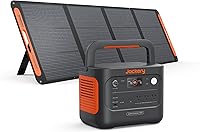
Are Harbor Freight Solar Generators Any Good?
Harbor Freight solar generators are fine for lights, phones and small camping loads, but they are not built for serious home backup. Check the watt-hours and continuous output first, because the low price usually comes with a small battery and a modest inverter.
On this page (7 sections)
- What are Harbor Freight solar generators actually built for?
- What specs decide whether a budget solar generator is any good?
- Where do budget solar generators work well?
- What are the real limits during a blackout?
- How do mid-range alternatives compare for backup use?
- Are Harbor Freight solar generators worth the money?
- Quick checklist before you buy
Are Harbor Freight solar generators any good? For small jobs, yes: they can run lights, charge phones and keep a fan going during a short outage.
For whole-home backup or a fridge on a hot day, they fall short, and the low price usually shows up as a small battery and a modest inverter.
That split matters because the question "are harbor freight solar generators any good" really means "good enough for what I need". Answer that first and the brand comparison gets much simpler.
What are Harbor Freight solar generators actually built for?
They're built for light, portable power, not for running a house. Think campsite lighting, a phone bank during a storm, or a small fan on a hot night.
Harbor Freight sells these units as budget portable power stations with a solar charging option. The value pitch is a low entry price, and that price comes from smaller batteries and simpler electronics than premium brands use.
You get fewer outlets, a lower continuous wattage and a shorter feature list.
That's not a flaw on its own. A generator that only needs to top up a phone and run a lamp doesn't need a 1,000Wh battery or a 1,800W inverter.
Paying for capacity you never use is the bigger waste.
The catch is that many buyers picture a blackout machine and end up with a camping gadget. Before you buy, write down what you actually want to run and for how long.
If the list includes a fridge, a space heater or a sump pump, this class of unit is the wrong tool. Our guide to the best solar generator for home backup covers the sizes that handle those loads.
What specs decide whether a budget solar generator is any good?
Four numbers separate a useful unit from a paperweight: watt-hours, continuous watts, surge watts and battery chemistry. Check all four before you compare prices.
Watt-hours set runtime. A 300Wh battery running a 60W fan gives you roughly 4 to 5 hours once you allow for inverter losses.
Continuous watts set what you can plug in at once. Surge watts cover motor startup, which can briefly pull two or three times the running figure.
Battery chemistry decides lifespan. LiFePO4 cells handle more charge cycles than older lithium-ion packs and tolerate heat better.
Many budget units still use the older chemistry, so confirm which one you're getting.
Solar input matters too. A narrow input range limits which panels will charge the unit, and a low maximum means slow solar charging.
Compare these figures against a mid-range unit and the price gap starts to make sense. The same checklist applies to any portable power station with solar panel, whatever the badge on the front.
Where do budget solar generators work well?
They work best as a second power source, not a primary one. A small unit earns its place in a tent, a car trunk or a closet shelf, ready for small jobs.
Camping is the natural fit. Lights, a phone, a camera battery and a small speaker all draw little power, and the unit stays light enough to carry.
Tailgates and beach days suit the same pattern.
Light home backup is the other honest use. A router, a few LED lamps, a fan and a phone charger keep a room livable for a few hours when the grid drops.
That's real value for the money.
The limit is motor loads and heat. Anything that heats or cools a room draws far more than a budget inverter can supply.
Check the label on each device and add the watts up honestly. A single space heater can exceed the whole unit's output on its own.
What are the real limits during a blackout?
The main limit is capacity, and the second is the inverter's continuous rating. A blackout is when people discover both at once.
A fridge needs 100 to 200W running but can spike higher at compressor start. Add a few lights and a router and you're already near the ceiling of a small budget unit.
The battery drains within hours, and solar charging is slow and weather-dependent.
Whole-home loads are out of reach. A furnace blower, a well pump or a microwave will trip a modest inverter or drain the battery in minutes.
Harbor Freight units aren't sold as whole-home backup and shouldn't be treated as one.
Safety deserves a mention here, because any battery pack plugged into a wall outlet deserves care. Read are portable power stations safe for the basics on ventilation, placement and storage.
A unit left under a blanket or next to a heater is a risk no matter who made it.
How do mid-range alternatives compare for backup use?
A mid-range unit buys you more capacity, a longer warranty and faster charging. If backup is the goal, spending a bit more usually gets you a machine that does the job.
Two units from Bluetti show what that step up looks like. The Bluetti Elite 30 V2 packs 288Wh into 9.4 lbs and runs 600W continuously, with a 10ms UPS mode for routers and laptops.
It's still a small unit, but the LFP battery, 380W wall charging and 60-month warranty set it above the bare-budget tier.
The Bluetti AC180 goes further for real outages. Its 1,152Wh LiFePO4 battery and 1,800W output, boosted to 2,700W in the app, handle a fridge or a small heater for a while.
Its 500W solar input means a panel can recharge it in 2.8 to 3.3 hours of good sun.
Both units cost more than a Harbor Freight model. The question is whether the extra money buys capability you'll use.
If your answer to "what will I run" includes a fridge, it does. If it's a camping lamp, a smaller budget unit stays the sensible buy.
Which should you pick?
Pick the Elite 30 V2 if you want a light UPS for small electronics and camping. Pick the AC180 if outages mean food in the fridge and you want solar charging to keep up.
Pick a budget Harbor Freight unit only when the load list is genuinely small and the price is the deciding factor.
What about a solar panel to match?
A separate panel decides how fast any of these units recharges from the sun. Match the panel's voltage and connector to the generator's solar input before you buy.
The ZOUPW 100W folding panel uses 23.5% monocrystalline cells and includes a 5-in-1 cable with XT60, Anderson, DC7909, DC5521 and DC8020 connectors. Its XT60 plug fits the Elite 30 V2, and the 10 ft cable lets you move the panel into better light.
The panel body is IP67 rated, though the junction box needs to stay dry.
Remember that a panel's output is capped by the generator's input limit. A 100W panel feeding a unit with a 60W solar limit only delivers about 60W.
For the full picture on charge methods and speeds, see how to charge a portable power station.
Are Harbor Freight solar generators worth the money?
They're worth it when the job is small and the budget is tight. For camping, tailgating and keeping phones and lamps alive in a short outage, a low-cost unit does the work without overspending.
They're not worth it when you expect real backup. Fridge, heat, pump or medical device loads need more watt-hours and a stronger inverter than this class provides.
Buying twice costs more than buying once.
So weigh your load list against the price. If the list is short, a budget unit is a fair deal.
If it's long, put the money toward a larger LiFePO4 station with a clear watt-hour figure and a proper warranty. Either way, the answer to "are harbor freight solar generators any good" comes down to what you plug in, not the logo on the case.
Quick checklist before you buy
Write the load list, add the watts, then compare watt-hours per dollar. That order keeps you out of the "too small" trap.
- Add the running watts of everything you'd plug in at once.
- Add surge for anything with a motor, like a fridge or fan.
- Multiply the watts by the hours you need to get watt-hours.
- Check the inverter's continuous rating against your total.
- Confirm LiFePO4 chemistry if you want a long service life.
- Check the solar input range and the panel connector type.
- Note the warranty length and the return window.
Run that checklist against any unit, budget or premium, and the choice becomes obvious. A solar generator is only as good as the load it can carry for the hours you need it.
Frequently asked questions
Are Harbor Freight solar generators any good for home backup?
Only for small loads. Their capacity and output suit lights, phones, a router or a fan during a short outage.
For a fridge, a sump pump or a furnace blower, you need a larger unit with a higher continuous wattage and a pure sine wave output.
What size solar generator do I need for a power outage?
Add up the watts of what you must run and multiply by the hours you need it. A fridge plus a few lights for a day usually calls for around 1,000Wh or more.
Size up rather than down, since inverters lose some power as heat.
Can I charge a Harbor Freight solar generator with my own solar panel?
Sometimes, but the input voltage and connector must match the unit's solar port. Many budget generators accept a narrow voltage range.
Check the panel's open circuit voltage against the generator's stated solar input before you connect anything.
Are budget solar generators safe to leave plugged in?
Reputable units with a battery management system are designed for continuous charging. Keep them on a hard, dry surface with airflow, and don't cover the vents.
Any unit that gets hot, smells odd or shows a swollen battery should be unplugged and retired.
Is a Harbor Freight solar generator cheaper than a name brand?
The sticker price is often lower, but compare watt-hours per dollar and the warranty length. A small budget unit that can't run your fridge still costs money, and replacing it sooner erases the saving.
Check the return window before you commit.
What should I check before buying any budget solar generator?
Look at battery chemistry, continuous versus surge watts, solar input range and warranty. LiFePO4 batteries last longer than older lithium types.
A pure sine wave inverter protects sensitive electronics.
Write those four specs down and compare them side by side.