6 Best Portable Power Station for Camping (October 2026)
The best portable power stations for camping include the Jackery Explorer 1000 v2 for longer car camping, the Bluetti Elite 30 V2 for short walk-in stays, and the Jackery Explorer 300 for light electronics kits.
On this page (8 sections)
- Which portable power station is best for camping?
- What should you compare before choosing a camping power station?
- Which camping power station fits your trip?
- How do you choose between a 300Wh and 1,000Wh camping station?
- How should you plan charging at camp?
- What should you do before and during a camping trip?
- Which mistakes waste the most camping power?
- Which is the best portable power station for your camping trip?
The Jackery Explorer 1000 v2 is the best portable power station for camping for most car campers who need several devices powered between charges. Choose a smaller station for a light electronics kit, or the Bluetti Elite 100 V2 for appliances that need more AC output.
The right choice starts with your trip, not the biggest number on the box. A weekend of phone and camera charging needs a different setup from a fridge running through warm days and nights.
Capacity sets your energy budget; output sets which devices can run. Carrying distance and a realistic recharge plan decide how much battery makes sense.
Our picks at a glance
-
1

-
2

-
3

Which portable power station is best for camping?
Choose the Jackery Explorer 1000 v2 for longer car camping, the Bluetti Elite 30 V2 for compact AC power, or the Anker SOLIX C300 DC for a kit built around USB charging. The other picks suit light AC loads, higher-draw appliances or a solar bundle.
Jackery Explorer 1000 v2: Best for longer car camping
- 1,070Wh capacity
- 1,500W AC output
- 23.8 lb weight
- Three pure sine wave AC outlets
Choose this for car camping with several devices or longer gaps between charges. Its larger battery earns its carrying weight when a compact station cannot cover your energy plan.
Pros
- Largest battery in this group
- Three AC outlets for separate devices
- App offers several charging modes
Cons
- Too much weight for a light electronics kit
- Solar panel is separate and must be compatible with Jackery
Bluetti Elite 30 V2: Best for short walk-in stays
- 288Wh capacity
- 600W continuous AC output
- About 9.5 lb
- Wall, car and solar charging
A compact choice for campers who need AC power and carry their gear beyond the parking area. Its output suits more loads than the Explorer 300, but its small battery still favors short use.
Pros
- Compact alternative to the larger stations
- 600W continuous AC output
- Fast wall charging for stops between camps
Cons
- Small battery for overnight appliances
- Power Lifting Mode is not a general continuous-output rating
Jackery Explorer 300: Best for light electronics kits
- 292Wh capacity
- 300W rated AC output
- Two AC outlets
- 100W USB-C PD port
Choose this for cameras, laptops and other modest loads when you still need AC outlets. Skip it if cooking appliances or long fridge runtime drive your power needs.
Pros
- Integrated carrying handle
- AC and USB connections for mixed electronics
- Car charging cable included
Cons
- Limited output for appliances
- Solar panel sold separately
Bluetti Elite 100 V2: Best for higher-draw camp appliances

- 1,024Wh capacity
- 1,800W rated AC output
- 25 lb weight
- BLUETTI says silent mode runs at 30 dB
Choose this when an appliance needs more continuous AC output than the top pick provides. Its battery is close in size to the Jackery, so higher output does not mean longer runtime.
Pros
- Highest continuous AC output here
- Wi-Fi and Bluetooth app control
- Fast AC recharge between destinations
Cons
- Heavy for carrying beyond the car
- Must stay upright during transport and storage
Anker SOLIX C300 DC: Best for USB-only camping

- 288Wh capacity
- 300W total output
- Two 140W two-way USB-C ports
- USB and car socket outputs
A good match for phones, USB-C laptops and other gear that can charge without an AC outlet. Check every device's connection before choosing this DC-only station.
Pros
- Two high-power USB-C ports
- Seven device charging ports
- Solar and car recharging supported
Cons
- No AC outlet for plug-in appliances
- Wall charger and shoulder strap are not included
Jackery Solar Generator 300: Best for sunny low-use stays
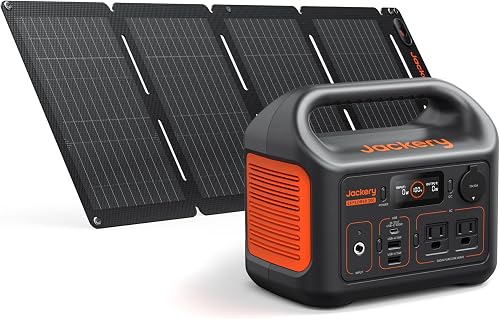
- 292Wh capacity
- 300W rated AC output
- 40W Air solar panel included
- AC adapter and car charger cable included
This Explorer 300 bundle suits light electronics use with time to collect solar energy at camp. The included panel favors gradual replenishment rather than a quick refill.
Pros
- Includes a solar panel
- AC and USB outputs for small devices
- Includes wall and car charging gear
Cons
- Small panel needs a long charging window
- Station and panel may arrive separately
FineOwner compared capacity, continuous output, carrying weight, connections and charging options against common camping needs. The main tradeoff is stored energy versus the weight you must move and the equipment you actually need to power.
What should you compare before choosing a camping power station?
Compare usable energy, continuous output, carrying weight and recharge access before choosing. Then check that the ports match your gear without relying on adapters you have not packed.
| Product | Best for | Capacity | AC output | Weight | Our score |
|---|---|---|---|---|---|
| Jackery Explorer 1000 v2 | longer car camping | 1,070Wh | 1,500W | 23.8 lb | 9.2 |
| Bluetti Elite 30 V2 | short walk-in stays | 288Wh | 600W continuous | About 9.5 lb | 8.8 |
| Jackery Explorer 300 | light electronics kits | 292Wh | 300W rated | 8.7 | |
| Bluetti Elite 100 V2 | higher-draw camp appliances | 1,024Wh | 1,800W | 25 lb | 8.5 |
| Anker SOLIX C300 DC | USB-only camping | 288Wh | 2.8 kg | 8.4 | |
| Jackery Solar Generator 300 | sunny low-use stays | 292Wh | 300W rated | 7.7 |
How much battery capacity do your camping devices need?
Plan enough energy to reach your next reliable recharge, with a reserve for losses and extra use. Multiply each device's watts by its operating hours to estimate watt-hours.
For example, a hypothetical 10W light used for 4 hours needs 40Wh, and a 30W device used for 3 hours needs 90Wh. Together, they need 130Wh before accounting for the station's own power use and conversion losses.
For a small, known electronics load, adding roughly 20–30% is a useful starting allowance. Keep a larger reserve when weather, essential equipment or uncertain appliance use could change the plan.
Don't count every hour away from home as an operating hour. A camera battery may need one refill, while a fan or fridge may draw energy across much of the trip.
Use daily energy consumption for cycling appliances when available. Our portable power station size guide explains how to turn a device list into a capacity target.
What output does the best camping power station need?
Your station needs enough continuous output for everything running together, plus suitable startup capability for devices that briefly demand more power. A larger battery cannot make an undersized inverter run an incompatible appliance.
Add simultaneous loads separately from your daily energy estimate. A laptop and light may fit comfortably, but switching on another appliance can push the total beyond the station's limit.
Surge ratings describe brief demand, not an output you can use all evening. Power Lifting modes also have device restrictions, so use the normal continuous rating as your first filter.
Our guide to what a 300W power station can run helps narrow down smaller loads. Check the actual appliance rather than assuming all fans, fridges or laptops draw the same power.
How far will you carry the whole setup?
Choose a station you can move over the full route to camp, including steps, slopes and soft ground. A short lift from the trunk is different from several trips along a wooded path.
Include the panel, cables and charging bricks in your packed weight. A solar bundle also needs space for the folded panel and a safe way to carry it.
For backpacking, even the compact stations here add substantial weight. If your only needs are a phone and headlamp, consider whether a smaller power bank would cover the trip.
Which connections will your devices actually use?
Match the station to each device's input connection and charging requirements, not just its number of ports. A USB-C socket does not guarantee that every cable and device combination supports the same charging speed.
Direct USB charging can avoid running a laptop's AC adapter through the station's inverter. Use the device's required USB-C power level and a suitable cable.
For a 12V appliance, check the socket's wattage limit, plug and voltage requirements. Several ports do not mean you can draw every port's maximum at once.
Which camping power station fits your trip?
Pick the station that meets your hardest requirement without adding unnecessary weight. That requirement might be energy for a longer stay, AC power for one device, or a simple way to charge USB gear.
Jackery Explorer 1000 v2: Best for longer car camping
- 1,070Wh capacity
- 1,500W AC output
- 23.8 lb weight
- Three pure sine wave AC outlets
Choose this for car camping with several devices or longer gaps between charges. Its larger battery earns its carrying weight when a compact station cannot cover your energy plan.
Pros
- Largest battery in this group
- Three AC outlets for separate devices
- App offers several charging modes
Cons
- Too much weight for a light electronics kit
- Solar panel is separate and must be compatible with Jackery
The Jackery Explorer 1000 v2 suits car campers whose energy plan exceeds what a compact battery can cover. Its 1,070Wh capacity and 1,500W AC output provide room for several electronics and compatible appliances.
At 23.8 lb, it makes most sense near the vehicle. The foldable handle helps with loading, but this is a poor trade if you only need a phone refill and a few hours of lighting.
Three pure sine wave AC outlets let you connect separate devices without making a power strip the center of your setup. Use its USB connections for compatible electronics and keep the total AC load within the station's limit.
Jackery says a full wall recharge takes 1.7 hours by default, or 1 hour with emergency charging enabled in its app before each charge. Solar requires a separate compatible Jackery panel, so include that restriction in your off-grid plan.
Bluetti Elite 30 V2: Best for short walk-in stays
- 288Wh capacity
- 600W continuous AC output
- About 9.5 lb
- Wall, car and solar charging
A compact choice for campers who need AC power and carry their gear beyond the parking area. Its output suits more loads than the Explorer 300, but its small battery still favors short use.
Pros
- Compact alternative to the larger stations
- 600W continuous AC output
- Fast wall charging for stops between camps
Cons
- Small battery for overnight appliances
- Power Lifting Mode is not a general continuous-output rating
Choose the Bluetti Elite 30 V2 when you need compact AC power for short use, rather than a large reserve for several days. Its 600W continuous output offers more appliance flexibility than the Explorer 300, while its 288Wh battery keeps the energy budget modest.
At about 9.5 lb, it's easier to carry beyond the parking area than either large station. It fits a short walk-in stay with modest electronics, provided your daily energy calculation leaves a reserve.
Skip it if a fridge or other overnight load uses most of that budget before morning. More output does not give this small battery the endurance of a larger one.
BLUETTI says wall charging reaches 80% in 45 minutes and full charge in 70 minutes. That's useful during stops with outlet access; its separate Power Lifting Mode should only influence your choice after you confirm appliance compatibility.
Jackery Explorer 300: Best for light electronics kits
- 292Wh capacity
- 300W rated AC output
- Two AC outlets
- 100W USB-C PD port
Choose this for cameras, laptops and other modest loads when you still need AC outlets. Skip it if cooking appliances or long fridge runtime drive your power needs.
Pros
- Integrated carrying handle
- AC and USB connections for mixed electronics
- Car charging cable included
Cons
- Limited output for appliances
- Solar panel sold separately
The Jackery Explorer 300 suits small electronics kits that still need AC outlets. Its 292Wh battery and 300W rated output fit modest loads without moving up to a larger car camping station.
Two AC outlets let you connect separate chargers, while the 100W USB-C PD port can serve compatible laptops directly. The integrated handle and included car charging cable suit moving between the vehicle and camp.
Choose it when your main gear includes cameras, drones or laptops, and your energy estimate fits its battery. Skip it for high-draw cooking equipment or a fridge plan that needs more energy than it can store.
Both AC outlets share the station's output limit, so plugging in a second appliance does not create extra power. This standalone version also suits buyers who already have a compatible solar setup or expect to recharge from the car or a wall outlet.
Bluetti Elite 100 V2: Best for higher-draw camp appliances
- 1,024Wh capacity
- 1,800W rated AC output
- 25 lb weight
- BLUETTI says silent mode runs at 30 dB
Choose this when an appliance needs more continuous AC output than the top pick provides. Its battery is close in size to the Jackery, so higher output does not mean longer runtime.
Pros
- Highest continuous AC output here
- Wi-Fi and Bluetooth app control
- Fast AC recharge between destinations
Cons
- Heavy for carrying beyond the car
- Must stay upright during transport and storage
Choose the Bluetti Elite 100 V2 when a compatible appliance needs more continuous AC output than the top pick offers. It pairs a 1,800W rating with 1,024Wh of capacity, so its main advantage is appliance support rather than a larger energy reserve.
The 25 lb weight favors drive-up campsites and road trips. Skip it if your gear draws little power or if carrying the station would become the hardest part of setting up camp.
BLUETTI says silent mode operates at 30 dB, a useful consideration when power stays on near sleeping areas. Don't assume that figure describes every load or charging condition.
BLUETTI also says AC charging reaches 80% in 45 minutes and full charge in 70 minutes. Keep the station upright during transport and storage, and leave room around its vents when arranging the rest of your gear.
Anker SOLIX C300 DC: Best for USB-only camping
- 288Wh capacity
- 300W total output
- Two 140W two-way USB-C ports
- USB and car socket outputs
A good match for phones, USB-C laptops and other gear that can charge without an AC outlet. Check every device's connection before choosing this DC-only station.
Pros
- Two high-power USB-C ports
- Seven device charging ports
- Solar and car recharging supported
Cons
- No AC outlet for plug-in appliances
- Wall charger and shoulder strap are not included
The Anker SOLIX C300 DC is the strongest fit here for a USB-focused camping kit. Its 288Wh battery, 300W total output and two 140W two-way USB-C ports suit compatible electronics without adding AC outlets you may never use.
It weighs 2.8 kg and includes a USB-C cable, but no wall charger or shoulder strap. Check that your existing charger and cables support your planned recharge speed.
Skip this model if even one essential device needs a household AC socket. A plug adapter cannot turn its DC outputs into an AC supply.
Before leaving, activate it through USB-C2 or USB-C3 with an 18W or higher USB-C PD wall charger. Solar requires an 11–28V panel with an XT60 connector; Anker excludes PS30, PS200, PS400 and 5V/3A USB-C panels, and warns against Anker panels over 100W.
Jackery Solar Generator 300: Best for sunny low-use stays
- 292Wh capacity
- 300W rated AC output
- 40W Air solar panel included
- AC adapter and car charger cable included
This Explorer 300 bundle suits light electronics use with time to collect solar energy at camp. The included panel favors gradual replenishment rather than a quick refill.
Pros
- Includes a solar panel
- AC and USB outputs for small devices
- Includes wall and car charging gear
Cons
- Small panel needs a long charging window
- Station and panel may arrive separately
Choose the Jackery Solar Generator 300 for light electronics use with a sunny place to recharge. It combines the Explorer 300 with a 40W Air solar panel, removing the need to choose a separate panel at the start.
The battery and output limits match the standalone Explorer 300 above. You are choosing a charging bundle, not more stored energy or greater appliance support.
Jackery says the included panel can bring the station to 80% in about 7.5 hours. That calls for a long charging window, so skip this bundle if you need a quick refill between shaded campsites or short driving stops.
It suits campers who remain at one sunny site and use energy slowly. Charge before departure, confirm both packages have arrived, and allow for cloudy weather rather than planning to replace a full day's use every day.
How do you choose between a 300Wh and 1,000Wh camping station?
Choose a 300Wh-class station when your full trip budget fits, and a roughly 1,000Wh model when you need a larger reserve between reliable charges. Trip length alone does not decide capacity.
For example, a hypothetical 100Wh daily plan totals 200Wh over 2 days before losses. That may fit a compact station with careful use, but extending the same plan to 4 days changes the choice unless you can recharge.
A steady 50W load uses 400Wh over 8 hours before losses. That is a different job from briefly charging a laptop, even if both devices fit the same output rating.
Heating uses stored energy quickly. A hypothetical 1,000W appliance running for 15 minutes consumes 250Wh before losses, which can take a large share of a camping battery.
If you plan electric cooking, budget each use rather than choosing on wattage alone. Our complete portable power station buying guide explains how capacity, output and connections work together.
How should you plan charging at camp?
Build your plan around charging access you can rely on, then use solar as extra support when conditions allow. Start with a full battery rather than expecting the campsite to cover the first day's use.
Wall charging during travel stops
Check how much charging time your route actually provides. A fast wall recharge helps only if you have permission to use an outlet and can remain there long enough.
Pack the correct charging gear in an easy-to-reach bag. A cable left at home can turn a planned recharge stop into a missed opportunity.
Car charging between campsites
Estimate charging from driving time, not from the number of days you have the car. Short drives may replace only part of what you used overnight.
Vehicle sockets have their own limits, and some remain powered when the engine is off. Follow the vehicle and station manuals so charging does not leave you with a depleted starter battery.
Solar charging at a fixed campsite
Choose solar when you can place a compatible panel in useful sun for several hours. Trees, clouds, panel angle and the changing sun position can reduce the energy you collect.
A panel's rated wattage is not a promise of that output throughout the day. Keep the station protected while positioning the panel in sunlight, using the cable length and placement allowed by the manuals.
Our guide to portable power stations with solar panels explains how to match the parts. For wall, car and solar basics, see charging a portable power station.
What should you do before and during a camping trip?
Set up the complete power kit before departure, then keep it dry, ventilated and easy to monitor at camp. Confirm that each essential device runs and charges with the exact cable you plan to pack.
Before leaving home
Charge the station and connect your devices in the combinations you expect to use. Check that the correct output group is enabled and that the cables reach without strain.
Put the charging cables, adapters and manuals together. For an essential overnight device, confirm its power requirements and expected use rather than relying on a broad compatibility claim.
At the campsite
Place the station on a stable, dry surface away from puddles, direct heat and foot traffic. Keep vents clear and avoid enclosing it in a bag while it operates or charges.
Route cables so people won't trip over them or pull the station off a table. Keep plugs and connections sheltered from rain and condensation.
Check the battery level after the first few hours and again before night. If it is falling faster than planned, stop optional loads early enough to preserve power for essentials.
Turn off unused output groups when practical. An inverter left on can consume energy even when the attached device is idle.
After the trip
Disconnect gear, inspect cables for wear and let any damp outer surfaces dry before storage. Follow the brand's storage charge guidance and temperature limits.
Check the battery periodically during a long break between trips. Don't leave the station forgotten in a hot vehicle or buried under gear that could damage its ports.
Our guide to portable power station safety covers placement, charging and storage in more detail.
Which mistakes waste the most camping power?
The biggest mistakes are buying on watts alone, trusting ideal solar times and leaving optional loads running. Each can leave a suitable-looking station short of energy before the trip ends.
- Confusing watts with watt-hours: Output tells you what can run; capacity tells you how much energy you have.
- Counting outlets as extra output: Multiple sockets still share the station's total limit.
- Ignoring idle consumption: A powered AC output can drain the battery even when its attached device is doing little.
- Treating surge or lifting power as continuous output: Use the normal rating first and check any special mode's restrictions.
- Planning around perfect solar weather: Carry enough reserve to cope with a slower recharge.
- Buying capacity for one optional appliance: Decide whether that appliance earns the extra weight before sizing the entire kit around it.
A fridge also needs its own energy plan. Compressor cycling, warm contents and frequent opening change consumption, so a single running-watt figure cannot predict every camping day.
Keep an essential-load list separate from comfort items. If the battery drops faster than expected, you'll know which devices to turn off first.
Which is the best portable power station for your camping trip?
Choose the best portable power station for camping by your limiting need: energy between charges, appliance output, carrying distance or charging access. Use these decision rules to narrow the choice.
- Longer car camping with several devices: Choose the Jackery Explorer 1000 v2 when the compact batteries cannot cover your energy plan.
- Compact AC power with more output headroom: Choose the Bluetti Elite 30 V2 for short use with loads that exceed the Explorer 300's rating.
- Light electronics with an AC requirement: Choose the Jackery Explorer 300 when its modest output covers everything you bring.
- Higher-draw appliances near the vehicle: Choose the Bluetti Elite 100 V2 when its extra continuous output is necessary.
- Phones, USB-C laptops and DC gear: Choose the Anker SOLIX C300 DC after confirming that no essential device needs AC.
- Light use at a sunny base camp: Choose the Jackery Solar Generator 300 if gradual solar replenishment fits your schedule.
Before ordering, write down your daily watt-hours and highest simultaneous load, then check the packed weight and charging gear. Use our guide to choosing a portable power station size to finish that calculation.
Our top 3 picks at a glance
-
1
-
2
-
3
Frequently asked questions
How many watt-hours do you need for camping?
Choose enough watt-hours to cover your devices between reliable recharges, plus a reserve for losses and extra use. A roughly 300Wh station suits modest electronics needs; a roughly 1,000Wh station gives more room for longer stays or appliances.
Multiply device watts by hours, then add the results before choosing.
Can a portable power station run a camping fridge?
Yes, if its output covers the fridge's running and startup needs and its battery covers the required hours. Use daily energy consumption when available, since a compressor cycles rather than drawing its rated power constantly.
Our guide to portable power stations and refrigerators explains how to plan capacity.
Is a 300W power station enough for camping?
A 300W station is enough for camping when your devices' combined draw and startup needs stay within its limits. Phones, cameras and many laptops fit that kind of setup.
Battery capacity still determines how long they run, so check both watts and watt-hours before planning a full weekend.
Can you recharge a camping power station with solar?
Yes, every station here supports solar charging with a compatible panel and connection. Match the panel's electrical limits to the station before connecting it, and allow for shade, clouds and short days.
Only the Jackery Solar Generator 300 bundle here includes a panel, so plan separate solar gear for the other picks.


