5 Best Portable Power Station for Tailgating (October 2026)
The best portable power stations for tailgating include the Jackery Explorer 1000 v2 for mixed-device tailgates, the Bluetti Elite 30 V2 for light packing, and the Bluetti Elite 100 V2 for appliance-heavy tailgates.
On this page (12 sections)
- Which portable power station is best for tailgating?
- What separates these tailgating power stations?
- Best portable power stations for tailgating: who should buy each?
- How much power do tailgating devices need?
- How do you choose enough capacity for the whole tailgate?
- What output should you check before bringing appliances?
- How portable should a tailgating power station be?
- Can solar or car charging help during a tailgate?
- How should you set up power safely at the lot?
- Which mistakes waste the most tailgating battery power?
- How do you care for the station after game day?
- Which best portable power station for tailgating should you choose?
The Jackery Explorer 1000 v2 is the best portable power station for tailgating for most mixed-device setups because it balances battery reserve, usable output and carry weight. Choose the Bluetti Elite 30 V2 for small loads and easier carrying, or the Jackery Explorer 2000 v2 for longer use without recharging.
Start with the gear you'll actually bring: a TV, powered cooler and cooking appliance create a different load from phones, lights and a speaker. Our portable power station buying guide explains the basics if watts and watt-hours are new to you.
Our picks at a glance
-
1

-
2

-
3

Which portable power station is best for tailgating?
The Explorer 1000 v2 is the best starting point for a tailgate with several powered devices. Move to a smaller battery when carrying matters most, or a larger one when your planned hours demand it.
FineOwner compared battery capacity, continuous output, connections, charging options and weight against those uses. The order favors a practical game-day setup rather than simply putting the biggest battery first.
A station that can start your appliance may still run out before kickoff. Check both its output limit and the energy needed for the whole visit before choosing a model.
What separates these tailgating power stations?
The main tradeoffs are runtime, appliance support and lifting weight. The comparison below puts those limits together so you can narrow the choices before reading each recommendation.
| Product | Best for | Capacity | AC output | Weight | Our score |
|---|---|---|---|---|---|
| Jackery Explorer 1000 v2 | mixed-device tailgates | 1,070Wh | 1,500W | 23.8 lb | 9.2 |
| Bluetti Elite 30 V2 | light packing | 288Wh | 600W continuous | About 9.5 lb | 8.8 |
| Bluetti Elite 100 V2 | appliance-heavy tailgates | 1,024Wh | 1,800W | 25 lb | 8.5 |
| Bluetti AC180 | vehicle-side setups | 1,152Wh | 1,800W | 37.4 lb | 8.5 |
| Jackery Explorer 2000 v2 | long game days | 2,042Wh | 2,200W | 39.5 lb | 8.1 |
The small Bluetti is for carrying less and powering less. The middle three suit broader setups, while the larger Jackery is for buyers who need more stored energy between charges.
Don't rank stations by outlet count alone. Every connected device shares the battery and the relevant output limits, regardless of how many sockets are available.
Best portable power stations for tailgating: who should buy each?
Choose by your hardest requirement, such as a long walk, a demanding appliance or an all-day schedule. Each pick below solves a different part of that problem.
Jackery Explorer 1000 v2: Best for mixed-device tailgates
- 1,070Wh capacity
- 1,500W AC output
- Three AC ports
- 23.8 lb weight
A good fit for a TV, cooler and small electronics when their combined draw stays within its output. Separate USB connections leave the AC ports available for appliances.
Pros
- Three pure sine wave AC ports
- Two USB-C ports and one USB-A port
- Foldable carry handle
Cons
- Solar panel is not included
- One-hour charging requires enabling emergency mode in the app before each charge
Jackery Explorer 1000 v2 for tailgating with mixed devices
The Explorer 1000 v2 suits a group bringing a TV, small powered cooler and charging cables, provided the total load fits its 1,500W continuous AC output. Its 1,070Wh battery gives you room to plan beyond short charging sessions.
At 23.8 lb, with a foldable handle, it is a more practical carry than the heaviest options here. Its three pure sine wave AC ports serve appliances, while two USB-C ports and one USB-A port handle smaller electronics.
Use direct USB charging where your device supports it, leaving AC sockets free for equipment that needs them. For an appliance near the station's output ceiling, choose more output headroom rather than relying on the surge figure.
Jackery gives a default full-charge time of 1.7 hours. Its one-hour emergency charge requires enabling the mode in the app before each use, so set that up before a rushed departure.
Skip this model for a phones-and-speaker outing where a smaller station will do. Also skip it if your required simultaneous load exceeds its continuous rating.
Bluetti Elite 30 V2: Best for light packing
- 288Wh capacity
- 600W continuous output
- About 9.5 lb weight
- AC, car and solar charging
Choose this compact station for small electronics and short sessions with modest loads. Its easy carry matters more than its limited energy reserve on a walk across the lot.
Pros
- Lightest option here
- 380W wall charging
- Bluetooth and Wi-Fi app control
Cons
- Smallest battery capacity here
- Power Lifting mode does not provide 1,500W of standard continuous output
Bluetti Elite 30 V2 for a lighter walk across the lot
The Elite 30 V2 is the pick for small electronics and easy carrying. Its 288Wh battery and roughly 9.5 lb weight suit a modest setup far better than a long day of appliance use.
Its 600W continuous output is enough for many small loads, but output is not the main constraint here. A device can sit comfortably below that limit and still drain this compact battery quickly.
Bluetti's Power Lifting mode reaches up to 1,500W for compatible loads. Plan around the standard continuous rating, and don't treat that special mode as a reason to buy a small battery for electric cooking.
Bluetti gives an AC charging time of 45 minutes to 80%, useful when you need a top-up before leaving. AC, car and solar charging offer options, though you still need the right source and cables.
Choose it for lights, phone charging and a speaker. Skip it for uninterrupted TV-and-cooler use unless your energy estimate fits, and consult the 1,000W-class power station guide when considering larger loads.
Bluetti Elite 100 V2: Best for appliance-heavy tailgates
- 1,024Wh capacity
- 1,800W rated AC output
- 25 lb weight
- Wi-Fi and Bluetooth control
This model suits buyers whose appliance load exceeds the top pick's output but who still want a lighter carry than the AC180. More output does not mean more stored energy.
Pros
- Higher rated output than the top pick
- AC charging to 80% in about 45 minutes
- Bluetti rates silent mode at 30 dB
Cons
- Less capacity than the AC180
- Must stay upright during transport and storage
Bluetti Elite 100 V2 for more demanding appliances
The Elite 100 V2 suits buyers who need more AC output without a large jump in carry weight. It pairs a 1,024Wh battery with 1,800W rated output in a 25 lb unit.
That makes it a useful alternative when an appliance's running draw exceeds the top pick's limit. It does not give you a bigger energy reserve, so a high-draw appliance can still shorten the day sharply.
Bluetti gives an AC charging time of about 45 minutes to 80%. Wi-Fi and Bluetooth app control let you monitor and manage the station, but arrange your setup so you can also reach its controls directly.
Bluetti rates silent mode at 30 dB, which may matter if the tailgate leads into an overnight stay. That is a mode-specific figure, not a promise for every load or charging setting.
Choose it when appliance output is your deciding factor. Skip it if you mainly need longer runtime than the top pick offers, and keep it upright during transport and storage as Bluetti directs.
Bluetti AC180: Best for vehicle-side setups

- 1,152Wh capacity
- 1,800W output
- Eight outlets
- 37.4 lb weight
The AC180 adds some battery reserve over the lighter 1kWh-class picks. It makes the most sense when it can stay close to the vehicle rather than travel across the lot.
Pros
- Largest battery among the 1kWh-class picks here
- Car and solar charging cables included
- Bluetti provides a 5-year warranty
Cons
- Heavy for its capacity compared with the lighter picks
- Solar input is limited to 500W
Bluetti AC180 for a setup beside the vehicle
The AC180 makes sense when extra battery reserve matters more than carrying comfort. It has 1,152Wh of capacity, 1,800W output and eight outlets across its connections.
The extra energy over the lighter middle picks is useful, but modest. At 37.4 lb, it asks for a much bigger lifting commitment, so choose it with a specific runtime need in mind.
This is a better fit for a tailgate that stays beside the vehicle than one involving a long walk. Decide how you'll lift it past coolers and other cargo before packing the trunk.
Bluetti gives a full-charge time of one hour at 1,440W AC input. It also supports up to 500W solar input, and includes AC, car and solar charging cables.
Choose the AC180 when its capacity, included cables and Bluetti's 5-year warranty fit your plans. Skip it if easy carrying is your priority, since the Elite 100 V2 provides the same rated AC output in a lighter unit.
Jackery Explorer 2000 v2: Best for long game days
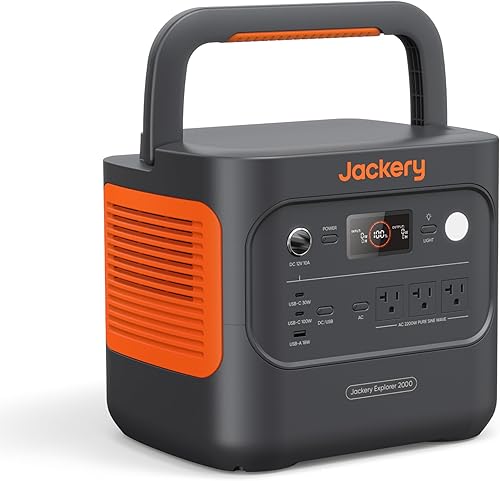
- 2,042Wh capacity
- 2,200W AC output
- Three AC ports
- 39.5 lb weight
Choose the largest battery here for long viewing sessions, shared loads or limited charging access. Its added reserve is useful only if you are comfortable moving the heavier unit.
Pros
- Largest battery capacity here
- Highest rated AC output here
- 100W USB-C port
Cons
- Heaviest option here
- Optional solar panels add gear to transport
Jackery Explorer 2000 v2: Best for long game days
- 2,042Wh capacity
- 2,200W AC output
- Three AC ports
- 39.5 lb weight
Choose the largest battery here for long viewing sessions, shared loads or limited charging access. Its added reserve is useful only if you are comfortable moving the heavier unit.
Pros
- Largest battery capacity here
- Highest rated AC output here
- 100W USB-C port
Cons
- Heaviest option here
- Optional solar panels add gear to transport
Jackery Explorer 2000 v2 for a long day without charging
The Explorer 2000 v2 is for buyers who need the most energy reserve in this group. Its 2,042Wh battery and 2,200W AC output suit longer viewing sessions or several shared loads that fit within its limits.
At 39.5 lb, it takes planning to move and pack. Choose it because your energy estimate calls for the larger battery, rather than carrying extra weight just in case someone brings another appliance.
Three AC ports and a 100W USB-C port cover appliances and compatible electronics. Agree on what guests can connect so an unplanned cooking load doesn't consume the reserve meant for the TV and cooler.
Jackery gives an AC fast-charge time of 66 minutes to 80%, with a full emergency charge in 102 minutes through the app. Optional panels can add solar charging, but they also add equipment to transport and position.
Skip this model for short outings with small electronics. It earns its place when a smaller battery would force you to cut viewing time or depend on uncertain charging at the lot.
How much power do tailgating devices need?
Add the watts of devices running together, then calculate the energy each uses over your planned hours. Those two totals answer different questions: whether the station can handle the load and whether it can last.
Use the label or manual for each device. A plug-in energy meter can help estimate actual consumption for gear you already have, especially equipment that cycles on and off.
For example, consider this hypothetical tailgate, using assumed draws rather than figures for any specific appliance:
| Device | Assumed average draw | Use time | Energy needed |
|---|---|---|---|
| TV | 70W | 4 hours | 280Wh |
| Speaker | 15W | 4 hours | 60Wh |
| Lights | 10W | 2 hours | 20Wh |
| Charging devices | 20W | 2 hours | 40Wh |
| Total | 115W if all run together | Varies | 400Wh |
The battery needs to supply more than the table's energy total because conversion and station operation use energy too. If you add a cooler, include its consumption rather than assuming the spare capacity will cover it.
A motor or compressor can also need extra power at startup. The station must support that brief demand while the other connected devices keep running.
How do you choose enough capacity for the whole tailgate?
Choose a battery that covers your calculated energy use plus losses and a reserve. Count the time before and after the game, including setup, delayed entry and the wait for traffic to clear.
For a rough AC planning estimate, you can divide required device energy by 0.8 to allow for losses. This is a general starting assumption, not a measured efficiency figure for any station here.
In the example above, 400Wh divided by 0.8 suggests about 500Wh of battery capacity before adding a reserve. Leaving another 20% unused would bring the planning target to about 625Wh.
Small loads running through AC can spend a larger share of energy on the station's own operation. Use compatible USB or DC outputs where practical, and switch off unused output groups.
For a powered cooler, average consumption depends on conditions, temperature settings and how often you open it. Pre-cool it at home, load chilled contents and use our guide to running a refrigerator from a portable power station for more planning help.
Our guide to how long a portable power station lasts explains why a battery's nameplate capacity does not translate directly into hours at the socket.
What output should you check before bringing appliances?
Check continuous output, startup demand and individual port limits before packing. A large battery cannot compensate for an output limit that is too low for your appliance.
Separate running power from startup power
Continuous output covers the load the station can supply during normal operation. Surge output covers a brief peak and should not be used as the normal allowance for a cooking appliance.
Special Power Lifting modes also need a separate compatibility check. Don't assume they behave like standard full-voltage output for TVs, compressors or other sensitive electronics.
Plan electric cooking as its own load
A heater running at 1,000W for 15 minutes uses 250Wh before losses. Even a short cooking session can consume a large part of the energy you planned for entertainment.
Run demanding appliances one at a time when needed, with enough output headroom for the equipment that stays on. Sequential use reduces the simultaneous load, but it does not erase the energy each appliance consumes.
For smaller setups, what a 300W power station can run helps explain the limits of low-output models. Check each device rather than judging by its size on the table.
How portable should a tailgating power station be?
Choose a unit you can lift from the vehicle and carry along the actual route. A comfortable lift at home can feel different after crossing uneven pavement with other gear.
Allow space around the handle and controls when packing. Don't bury the station under chairs or coolers, and avoid a setup that requires moving it repeatedly once cords are connected.
For heavier stations, a suitable cart can help on firm ground. Secure the unit during transport and keep it in the orientation required by its manufacturer.
Think about table space too. Put the station where drinks, food trays and people leaning on furniture are less likely to knock into it.
Can solar or car charging help during a tailgate?
Solar and vehicle charging can extend your available energy, but start with a full battery whenever possible. Treat charging at the lot as a bonus unless you have a dependable source and a realistic input estimate.
Solar panels need unshaded space, a suitable angle and compatible electrical limits. Parked vehicles, canopies and changing shadows can cut production, so panel wattage is not a guaranteed charging rate.
The Explorer 1000 v2 requires Jackery solar panels for solar charging, and its panel is not included. For the Bluetti models, check connector, voltage and input limits before choosing a panel.
A vehicle socket and a dedicated vehicle charging accessory can provide very different charging speeds. Confirm the intended connection, included cables and vehicle requirements before counting on energy from the drive.
Ask whether your vehicle socket stays live when the engine is off. Avoid draining the starter battery, and never run an engine in an enclosed area to charge equipment.
See our guide to charging a portable power station for a fuller comparison of charging methods. Finish app setup and download any needed instructions while you still have reliable internet access.
How should you set up power safely at the lot?
Place the station on a stable, dry surface with clear ventilation, then connect essential devices first. Check venue rules before bringing batteries, solar panels or cooking equipment.
Keep the station away from grill heat, hot exhaust, direct sun and spilled drinks. A canopy can provide shade, but don't wrap the unit in a cover that blocks airflow.
Route cables along the edge of your space, away from foot traffic and chair legs. Use outdoor-rated cords with a suitable current rating, keep connections dry and avoid pinching cables under tires or doors.
Plug in the TV and cooler before optional accessories, then watch the displayed load and remaining charge. Recheck after the cooler starts or someone adds a device, since the demand may change.
Agree on a cutoff point for optional loads. If charge falls faster than planned, turn off decorative lights and spare charging devices before sacrificing the equipment you most need.
Battery stations avoid engine exhaust during use, but they still need care around heat and water. Our portable power station safety guide covers placement, charging and everyday handling.
Which mistakes waste the most tailgating battery power?
The biggest mistakes are unplanned heating loads, unnecessary AC use and optimistic runtime estimates. Prevent them by deciding what the battery will power before guests start plugging things in.
- Buying by watts alone: high output means appliance support, not all-day endurance.
- Counting only the game: include pregame setup and postgame time.
- Leaving outputs on: disable AC or DC groups when nothing needs them.
- Ignoring accessories: streaming boxes, hotspots and charging adapters share the energy budget.
- Depending on sunshine: arrive with enough charge for essential loads if solar production falls short.
- Adding a last-minute appliance: check both its running draw and energy use before connecting it.
Don't leave charging phones and adapters scattered across the table. A dedicated charging area makes it easier to see what remains connected and keeps cables away from food and drinks.
How do you care for the station after game day?
Let the station cool, dry it as directed and recharge for its next use. Follow the manual's storage charge and temperature guidance rather than leaving it forgotten in a hot vehicle.
Inspect cords and connectors for damage before putting them away. Remove loose dirt with the cleaning method allowed by the manufacturer, and avoid getting moisture into ports or vents.
Store cables together so the right charging lead is ready next time. If the unit will sit unused, follow its recommended charge-check schedule and keep it away from extreme heat.
Which best portable power station for tailgating should you choose?
The best portable power station for tailgating is the smallest model that meets your load and runtime needs with a reserve. Make the final choice from your device list, planned hours and carry route.
Choose the Explorer 1000 v2 for a mixed TV, cooler and charging setup, or the Elite 30 V2 when light packing and modest loads come first. Pick the Elite 100 V2 when you need more appliance output without moving to a much heavier unit.
Choose the AC180 when its extra reserve justifies keeping a heavier station beside the vehicle. Pick the Explorer 2000 v2 when a long day or shared loads call for the largest battery here.
Before leaving, charge the station, pack the correct cables and set a limit on optional appliances. If your game-day gear also needs to serve weekend trips, compare the best portable power stations for camping before deciding.
Our top 3 picks at a glance
-
1
-
2
-
3
Frequently asked questions
What size power station do you need for tailgating?
Size the battery for total energy use and the output for devices running together. Multiply each device's watts by its hours of use, then add the results and leave room for losses and a reserve.
Small electronics need far less capacity than a TV and powered cooler running throughout the day.
Can a portable power station run a TV at a tailgate?
Yes, if the TV's wattage fits the station's continuous output and the battery covers your viewing time. Include any streaming device, hotspot and other powered accessories in your estimate.
Check the TV label or manual, and remember that screen size alone does not tell you its power draw.
Is a 300W power station enough for tailgating?
A 300W-output station can suit phones, lights and a small speaker if their combined draw stays below that limit. The output figure does not tell you how long the battery will last.
Check watt-hour capacity separately, and leave room for any motor startup demand before adding a powered cooler.
Can you recharge a power station during a tailgate?
Yes, with a supported charging source, compatible cables and permission to use that source at the venue. Solar output varies with shade and weather, while vehicle charging depends on the connection and station.
Our guide to portable power stations with solar panels explains what to plan before relying on sunlight.
How do you choose between a lightweight station and more capacity?
Choose low weight for long walks and modest loads; choose more capacity for extended viewing or shared appliances. Estimate your energy needs before deciding how much weight is worth carrying.
Use our portable power station size guide to turn your device list and planned hours into a useful battery target.


